Conversation
Every session begins by talking. What has happened since last time, what you want to look at, what feels manageable today. Nothing else starts until this is clear.
Educational Guide
Hypnotherapy is one of the most misunderstood words in this field, largely because entertainment got to it before therapy did. This page explains what it actually is, what a session may involve, and — with equal weight — what it cannot promise you.
The Basics
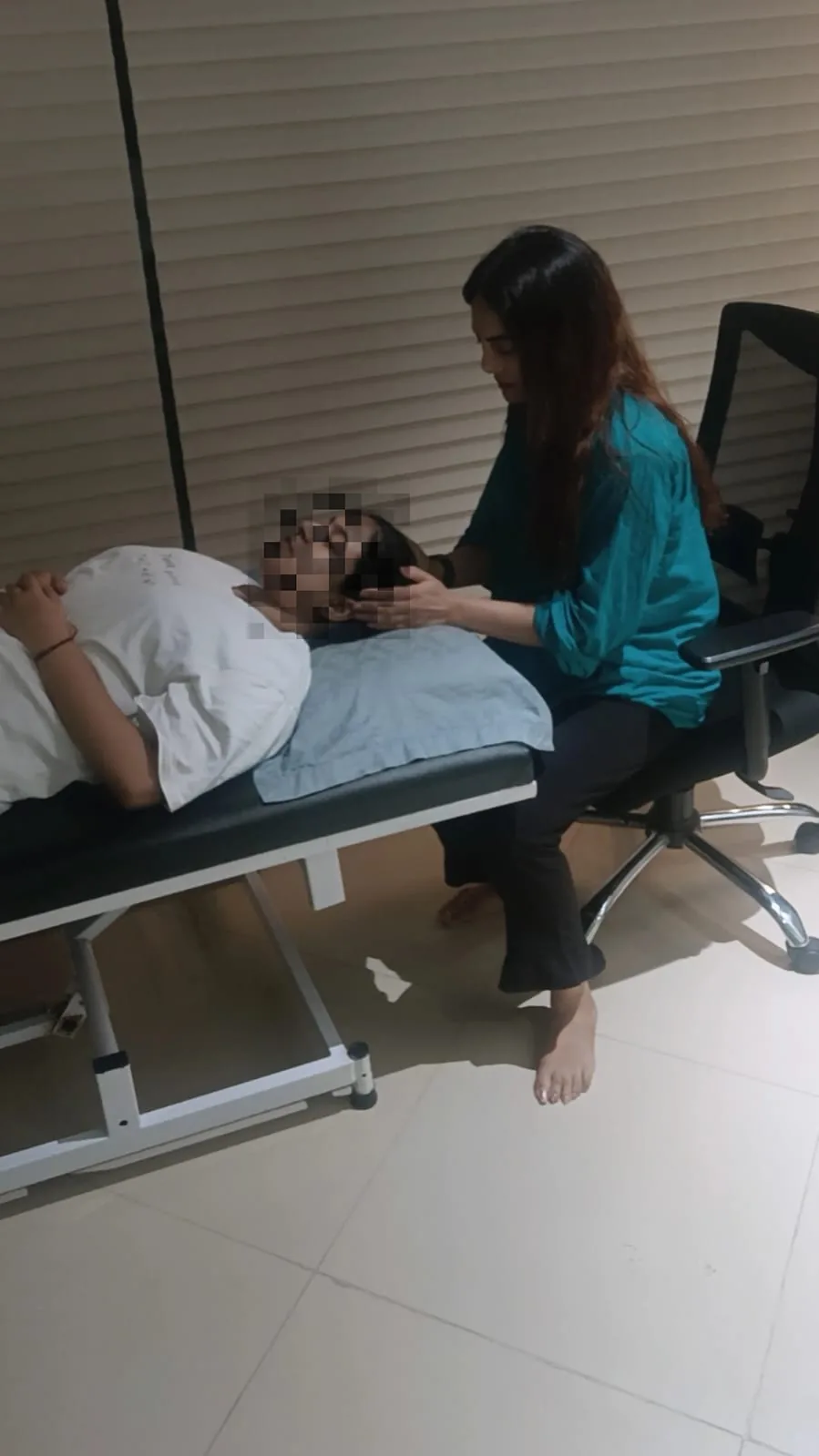
Hypnotherapy is a therapeutic approach that combines guided relaxation with focused attention, creating conditions in which a person can explore thoughts, feelings and associations with less of the usual mental traffic interrupting them.
The state itself is not exotic. Most people enter something very similar several times a week without naming it — absorbed in a book to the point of not hearing their name, driving a familiar route and arriving without recalling the journey, watching a film and forgetting the room. Attention has narrowed and the usual running commentary has quietened. Hypnotherapy uses that ordinary capacity deliberately, with a therapeutic purpose and with someone guiding it.
The word “therapy” in hypnotherapy is the operative half. The relaxed, focused state is not the treatment; it is a condition in which certain therapeutic conversations may become easier to have. A person who is tense, defended and mentally arguing with themselves is not usually in the best position to look calmly at a long-standing emotional pattern. Settling the system first is often practical rather than mystical.
It is also worth saying that hypnotherapy is not a single technique. Practitioners differ considerably in method, in how directive they are, and in what they use it for. It is entirely reasonable to ask any practitioner to describe what they actually do in a session before you agree to begin.
Practicalities
Descriptions vary widely, and yours may differ from all of the below. What follows is a general account of how a session tends to be structured — not a promise of what you will experience.
Scroll to see the full sequence
Every session begins by talking. What has happened since last time, what you want to look at, what feels manageable today. Nothing else starts until this is clear.
Whatever is going to happen is described first, in plain language, including what you can do if you want to stop. Surprises are not part of good practice.
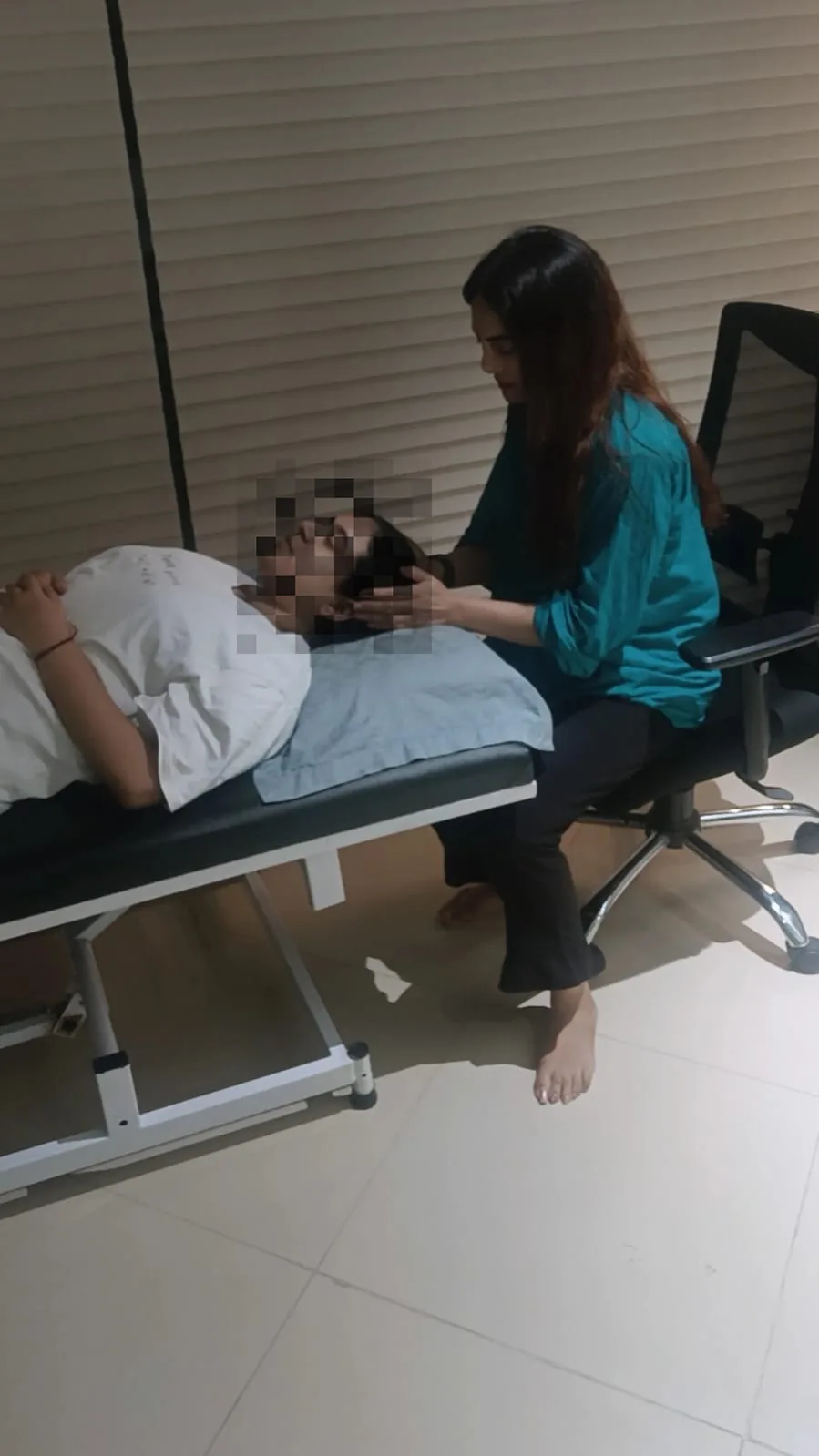
You sit or recline comfortably. Guided attention to breathing and physical sensation gradually lets the body settle. Many people describe heaviness, warmth, or a pleasant distance from surrounding sounds.
Attention narrows to one thread — a feeling, a situation, an image, a sentence. The characteristic experience is not blankness but unusual singularity of focus.
Guided questions and suggestions invite you to notice what is present. You may speak or stay quiet. You remain able to decline any direction at any moment.
Attention is guided gradually back to the room. This is unhurried by design — coming out abruptly is uncomfortable and unnecessary.
The session closes with discussion of what came up, what it might mean, and anything you may want to sit with before next time. Ending in silence is not helpful.
Responsiveness to hypnotherapy varies considerably between individuals, and having little response says nothing about your intelligence, willingness or character. If it is not proving useful for you, that is worth saying plainly so the approach can be adjusted or reconsidered.
Two Mechanisms
These are two separate things, and they do different jobs. Conflating them is one reason hypnotherapy is often described vaguely.
When a person is tense, alert and defended, a considerable share of their capacity is occupied with monitoring — the room, the therapist, their own performance, how this is going. Guided relaxation lowers that background load. Nothing therapeutic has happened yet; the conditions have simply improved.
This is also why the physical setting is not incidental. Comfort, quiet, an unhurried pace and a practitioner who is not rushing all contribute more than they might appear to.
Ordinary attention is broad and constantly reallocating. In a focused state, attention can rest on a single thread for longer than usual — one feeling, one recurring situation, one sentence that keeps appearing. That sustained contact is what makes exploration possible; ordinary conversation tends to skate across a topic and move on.
Together these two conditions may make it easier to notice something that is usually passed over quickly. That is the entire claim being made here. It is a modest one, and it is deliberately modest.
The Working Idea
“Subconscious” is another word that has been stretched a long way. Used carefully here, it means something quite ordinary: a great deal of mental processing happens without deliberate attention, and the results arrive as feelings and impulses rather than as reasoned conclusions.
Beliefs that were absorbed rather than argued for do not usually yield to argument. You can know with complete confidence that you are competent and still feel like a fraud in a meeting. The knowledge and the feeling are produced by different processes, and addressing only the first leaves the second untouched.
Usually it means staying with a feeling long enough for something adjacent to it to become noticeable — an image, a phrase, a bodily sensation, an association that had not previously connected. It is closer to patient observation than to excavation.
Where an old conclusion becomes visible, it can be considered from an adult vantage point — one with information the child did not have. Not “that was fine really”, but something more accurate: “that was about their situation, and I read it as being about me.”
A reframe is not installed and finished. It is offered, tested against real situations, and revised. What matters is whether it holds up on a difficult Tuesday, not whether it sounded convincing in the session.
Impressions arising in a relaxed, focused state are not verified accounts of past events. Memory is reconstructive, and material surfacing this way can be shaped by expectation and suggestion. It is not used here to establish what happened, to date events, or to draw conclusions about other people. The subject of the work is your present-day emotional patterns.
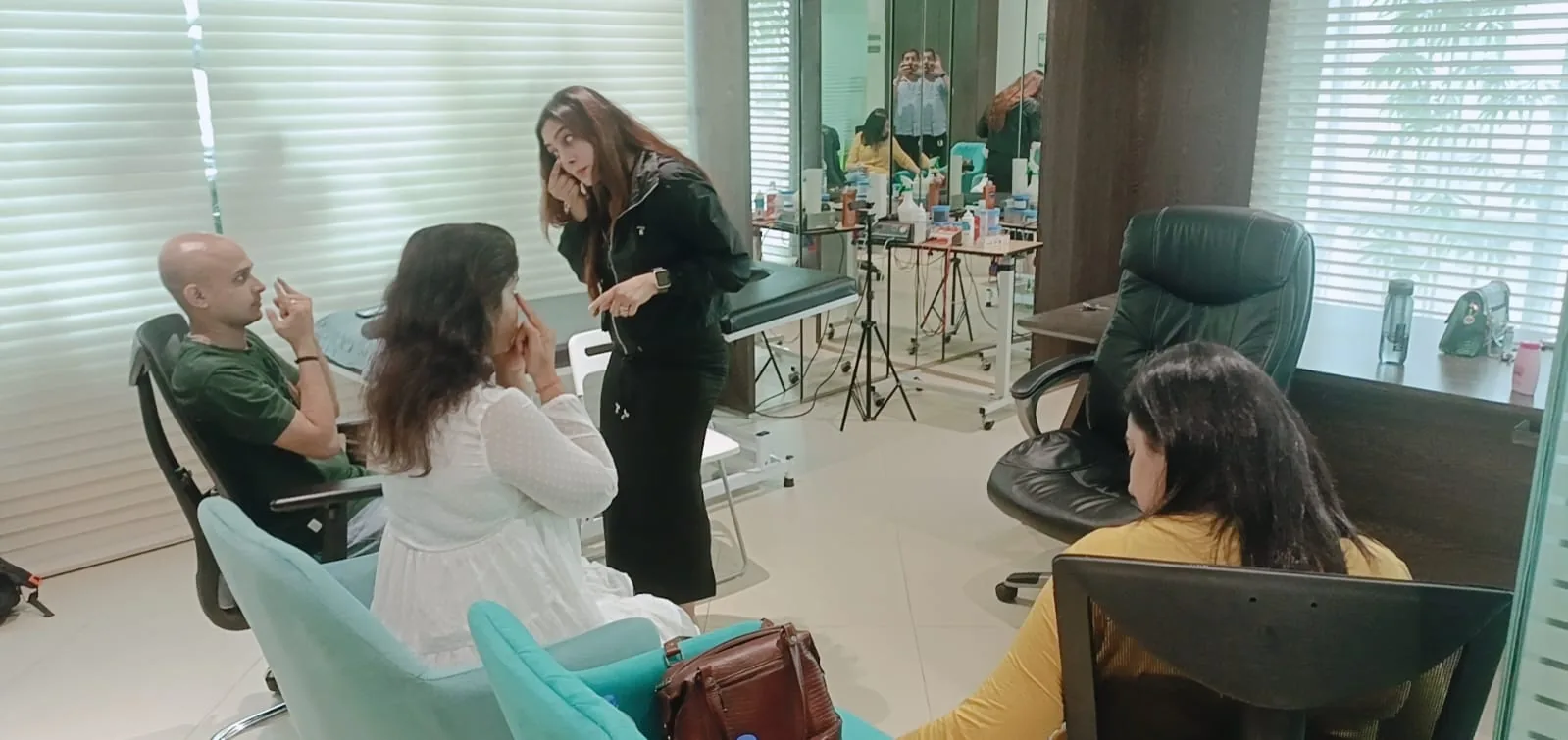
You may decline hypnotherapy entirely and work through conversation alone. It is one possible tool, not a requirement of working together.
Tailoring
A scripted session is easy to deliver and frequently useless, because the thing being worked with is specific to one person's history and the script was written for nobody in particular.
What gets adjusted, in practice:
Each of these is revisited as the work continues. A structure that suited the first month may not suit the third, and adjusting it is normal rather than a sign that something has gone wrong.
Honesty Matters More Than Persuasion
This section exists because you are entitled to it. Any practitioner who omits it is selling something rather than explaining it.
No responsible practitioner can promise how you will feel afterwards, how quickly change will occur, or that a particular difficulty will resolve. Outcomes depend on many factors, most of which sit outside the session. Individual experiences vary considerably.
Hypnotherapy is a supportive therapeutic approach. It does not cure conditions, and any claim that it does — for any diagnosis — should be treated with serious scepticism. It may help some people with some difficulties, which is a different statement.
Responsiveness varies widely between individuals. Some people find the state easy to enter and productive; others find it slight or unhelpful. Neither says anything about you as a person, and neither can be predicted reliably in advance.
It is not a truth-finding method. Material that arises should not be treated as verified fact about your past or about other people, and it is not used here for that purpose.
Change generally requires practice in ordinary life between sessions. The session may make something visible; whether it shifts usually depends on what happens over the following weeks.
It is not a substitute for assessment, diagnosis, medication or treatment provided by a qualified medical or mental health professional, and it should never be used as a reason to stop or alter prescribed treatment.
Before You Begin
Please read this section carefully, particularly if you are currently receiving treatment for a mental health condition or are unsure whether this approach is appropriate for you.
If you are experiencing significant psychological distress, a diagnosed psychiatric condition, thoughts of harming yourself or others, symptoms of psychosis, severe depression, an eating disorder, substance dependence, or anything affecting your safety or ability to function day to day — please seek support from a qualified medical or mental health professional. That is not a formality. Those conditions require care that this approach does not provide.
Before beginning, please disclose any current or past diagnoses, any medication you are taking, any treatment you are receiving, and any history of severe trauma or dissociation. This is not to exclude you; it is so that suitability can be assessed honestly and, where appropriate, a different form of support recommended.
Do not discontinue or adjust prescribed medication or treatment because of anything discussed in a session or read on this website. Any change to prescribed treatment is a matter for the doctor who prescribed it.
Many people find that supportive approaches work best in combination with, rather than instead of, professional treatment. If you are already working with a doctor, psychiatrist or psychologist, it is generally sensible to let them know what else you are doing.
You may decline hypnotherapy at any stage, pause the work, or decide it is not for you. None of this requires justification, and it will not be argued with.
If you are in crisis or at immediate risk of harm, please contact a qualified medical professional or your local emergency services now. This website and this practice do not provide emergency or crisis services.
Still Have Questions?
Questions about the method, suitability or what a session involves are welcome and are not an imposition. A clear understanding beforehand tends to make the work better.